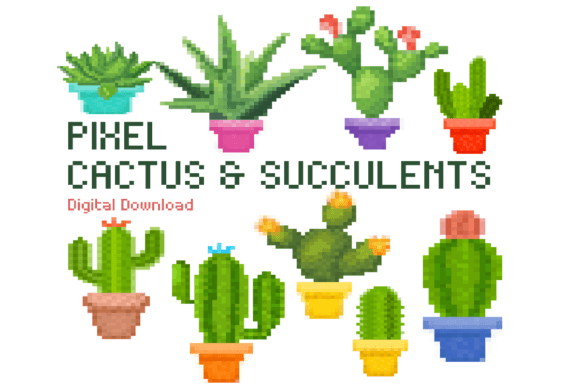
Cactus Succulent Pixel Graphics for Creative Projects
A Retro-Inspired Graphic Asset with Nostalgic Charm
At first glance, the Cactus Succulent Pixel design asset brings a wave of nostalgia. It's an 80s and 90s gaming-inspired pixel cactus and succulent that feels like stepping back into the golden age of retro visuals. The vintage-style 90s green cacti are rendered in a pixelated format, which gives them a distinct look that’s both playful and visually engaging. This graphic is not just an icon—it’s a mood booster that can inject a sense of fun and whimsy into any project.
The visual elements feel hand-crafted yet digital, making it ideal for clients who want to blend modern design with retro flair. Whether you're working on a handmade brand or a seasonal campaign, this asset has the potential to become a key part of your creative toolkit.
Where Cactus Succulent Pixel Shines in Real Design Work
This pixelated cactus and succulent design works exceptionally well in large layout areas, hero graphics, product mockups, and decorative accents. For example, if you're designing packaging for a small business that sells plant-based products, this graphic could be used as a thematic element on labels or promotional materials. Its retro charm fits perfectly with handmade businesses, Etsy shops, or print-on-demand sellers looking to stand out in a crowded market.
In social media graphics, the Cactus Succulent Pixel can serve as a supporting brand element. It adds personality to Instagram posts, Pinterest pins, or Canva templates. When paired with other retro-style icons, it can create a cohesive visual identity that resonates with audiences who appreciate nostalgic aesthetics.
For digital ads, website banners, or editorial designs, this graphic can act as a subtle accent that enhances the overall mood without overpowering the content. It's especially useful in projects that require a touch of creativity without sacrificing professionalism.
Design Situations to Consider Carefully
While the Cactus Succulent Pixel is versatile, there are situations where it may need more thoughtful placement. In small sizes or crowded layouts, the pixelated details might get lost or appear cluttered. It’s best avoided in minimalist branding or corporate materials where clean visual hierarchy is essential.
On complex backgrounds or low-contrast designs, the asset might not stand out as intended. Testing it in black and white is a good practice to ensure it maintains its visual appeal across different color schemes. Also, previewing it at various sizes will help determine how well it scales in different contexts.
When using it for commercial projects, always check the file formats—PNG or SVG—and confirm whether transparency is included. If you plan to use it for print, test the print quality to ensure it looks crisp and clear. Checking the commercial license is also crucial before incorporating it into client work.
Practical Designer Notes and Tips
As a professional designer, I always start by testing the Cactus Succulent Pixel in black and white to see how it holds up without color. This helps assess its contrast and readability against different backgrounds. Placing it on real mockups, such as t-shirt designs or mug mockups, gives a better idea of how it would look in final production.
I also compare it with different font styles—serif, sans serif, script, handwritten, and display fonts—to ensure it complements the typography. This is especially important when creating brand identities or marketing visuals that need a balanced composition.
If you're considering using this asset for a client project, make sure to review all the licensing terms. Since it cannot be used on T-shirts, mugs, greeting cards, party invitations, or stickers, it’s important to know its limitations. However, it’s still a great option for digital products, printable designs, and commercial design assets that don’t fall under those restrictions.
Emotional Appeal and Brand Consistency
The emotional appeal of the Cactus Succulent Pixel lies in its ability to evoke a sense of playfulness and nostalgia. This makes it a great fit for brands targeting younger audiences or those with a retro aesthetic. It adds warmth and character to otherwise sterile designs, helping to build stronger connections with the audience.
When used consistently across branding elements—such as logos, packaging, and social media posts—it contributes to brand recognition and visual trust. It’s a subtle but powerful way to reinforce the brand’s personality and differentiate it from competitors.
Whether you're working on a small business branding project, an editorial design piece, or a creative marketplace listing, the Cactus Succulent Pixel offers a unique visual element that can elevate your design work. Just remember to use it thoughtfully, ensuring it aligns with the overall project goals and brand identity.